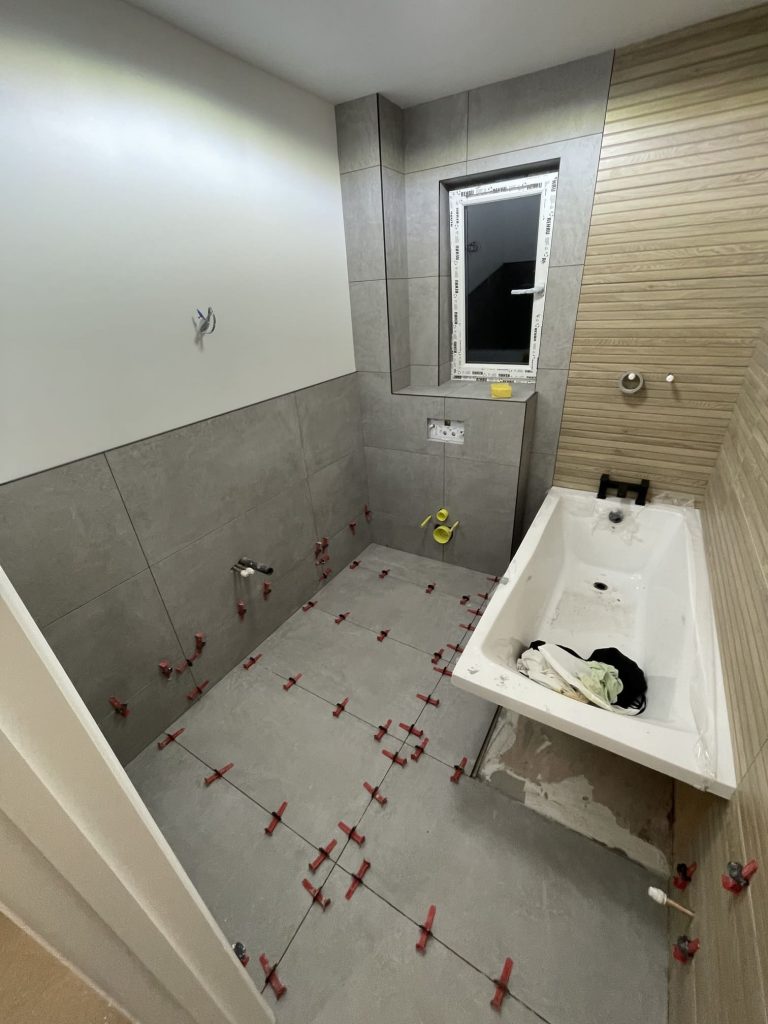
A semi-detached in Lower Earley with three growing kids. The owners get two quotes for a rear extension — both north of £58,000, both with a nine-month wait. Their integral garage, meanwhile, sits half-full of bikes and a tumble dryer. When they finally ran the numbers on a garage conversion in Reading, the figure came in at just under £16,500, with the room ready in five weeks.
That story plays out across Berkshire constantly, and yet most homeowners still default to the extension question first. The truth is that for a large slice of Reading’s housing stock — particularly the 1960s to 1990s estates in Tilehurst, Woodley, Caversham Park and Lower Earley — converting an existing garage delivers more usable square footage per pound than almost any other route. But it only works if you understand the regs, the hidden costs, and the postcodes where the maths quietly turns against you.
Here’s the full picture.
The Three Garage Types in Reading Homes (and Why It Changes Everything)
Before any sensible builder in Reading quotes a price, they need to know which of the three garage configurations they’re working with — because each one carries a different cost profile, a different set of structural surprises, and a different planning route.
Integral garages sit underneath or within the main footprint of the house, sharing walls and a roofline. They’re the most common type across Reading’s post-war estates and the cheapest to convert because the thermal envelope is already partially there.
Attached garages are bolted onto the side of the property with a shared wall but their own roof. Conversion is slightly more involved — usually a roof check, sometimes a new ceiling structure, and almost always a fresh damp-proof course.
Detached garages are a separate beast entirely. Convert one and you’re often building what Building Control treats as an outbuilding or annexe, not a habitable extension of the dwelling. That changes everything from insulation specs to fire separation.
If your home falls into one of Reading’s older terraces — particularly anything pre-1930 in central RG1 or Caversham — you may not have a garage at all in the conventional sense, and the article on [Internal Link: House Extensions in Reading] becomes the more relevant read.
What It Actually Costs in 2026
For a standard single integral or attached garage in Reading, expect a realistic 2026 budget of £14,000 to £22,000, with most projects landing close to the national average of £14,500 once a basic spec is factored in. Double garages typically run £22,000 to £35,000. Detached conversions, because of the planning and Building Regs complexity, often land between £20,000 and £35,000. The Federation of Master Builders puts the typical UK figure at £13,500 for a 16m² conversion, with the South East consistently running 20–30% above that baseline thanks to labour rates across the Thames Valley.
Working from real local quotes for general builders in Reading, a typical single conversion breaks down roughly like this:
- Foundations check, floor build-up and DPM: £2,000–£3,500
- Wall insulation (internal stud or external render) and plasterboard: £3,000–£4,500
- Replacing the garage door with brickwork and a window: £2,400–£4,200
- New internal door and frame: £400–£700
- Electrical first and second fix (Part P certified): £1,500–£2,800
- Heating extension (radiator or electric panel): £600–£1,500
- Plastering, skim and decoration: £2,000–£3,500
- Flooring (engineered wood, LVT or carpet): £900–£2,200
- Building Control fees and inspections: £400–£800
- Contingency (always budget 10%): £1,500–£2,500
The figures that catch homeowners out are almost always the same three. Utility relocation — boilers, consumer units and meters often live in the garage, and shifting them adds £1,500 to £4,000 fast. Damp remediation — Reading sits on clay-heavy subsoil along the Thames Valley, and a garage floor that hasn’t been heated for thirty years frequently needs a full tanking system before insulation goes down. Asbestos — garage roofs built between roughly 1955 and 1985 may contain asbestos cement sheeting, and licensed removal adds £400 to £1,200.
Strip those out and the headline figure looks tidy. Leave them in your budget from day one and the project finishes on time.
Planning Permission, Building Control & the Permitted Development Trap
Most garage conversions in Reading fall under Permitted Development rights, which means no formal planning application is required. Research from Resi suggests only around 10% of UK conversions need full planning. That’s the part homeowners hear and run with. The part they miss is the long list of exceptions.
If your property sits within a Conservation Area — and central Reading, Caversham village, parts of Earley and the Albert Road area all have designated zones — you’ll need full planning permission even for an internal conversion. The same applies if your home is listed, has an Article 4 Direction removing PD rights (some streets in central RG1 do), or if the conversion changes the external appearance in a way the council deems material. Replacing a garage door with a window and matching brickwork usually counts as material if you’re in any of those zones.
The bigger point most people miss: Permitted Development and Building Regulations are two entirely separate approvals. Even if you don’t need planning, you absolutely need Building Control sign-off, because you’re turning a non-habitable space into a habitable one. Reading Borough Council’s Building Control team will inspect at foundations, pre-plaster and completion stages. Skip this and the conversion is unmortgageable and uninsurable — and any future sale will collapse at the searches stage.
A Lawful Development Certificate is also worth applying for (£100–£300) even where Permitted Development applies — it provides legal proof the work was authorised, which solicitors will ask for on resale. The full process, including how to sequence approvals against the build, is covered in [Internal Link: Navigating Building Works in Reading]. For the official Permitted Development rules, the Planning Portal is the authoritative source.
Building Regs in Detail: What the Garage Has to Become
A habitable room in 2026 has to meet a specific thermal, structural and safety standard. Here’s the short version of what your converted garage actually needs to hit.
Floor: Insulation to a U-value of 0.18 W/m²K or better, sitting on a continuous damp-proof membrane lapped to the wall DPC. Most existing garage slabs need either a build-up over the top (raising floor level 100–150mm) or full removal and reconstruction.
Walls: Thermal upgrade to 0.18 W/m²K, typically via insulated plasterboard on battens internally, or external wall insulation if the garage is rendered. Breathable membranes matter — sealing in moisture without ventilation is how converted garages get black mould within two years.
Windows and natural light: A habitable room needs glazing equivalent to at least one-twentieth of the floor area for daylight, and one-twentieth opening for ventilation. Bedrooms must have a means of escape window — minimum 0.33m² openable area, with at least 450mm clear width and height.
Ceiling and roof: U-value 0.16 W/m²K for any roof element. If the garage roof is single-skin asbestos cement or thin steel, expect full replacement.
Electrics: Part P compliant, certified by a registered electrician, with new circuits properly tied into the consumer unit.
Fire separation: This is the rule that catches integral garage conversions out. If your converted room sits beneath a bedroom, the floor/ceiling between needs 30 minutes’ fire resistance.
The ROI Reality: Does It Add Value or Not?
Nationwide and Rightmove data put the average value uplift from a well-executed garage conversion at around 10–20% of property value — on a typical £420,000 Reading semi, that’s £42,000 to £84,000 of added equity against a £14,000–£22,000 spend. Industry data shows a typical return of £1.20–£1.50 for every £1 invested, making it one of the strongest ROI plays of any home renovation in Reading. By comparison, a loft conversion delivering similar floorspace usually costs £36,000–£84,000 — two to four times more.
But “average” hides a real geographic split. In Caversham Heights, central Reading and parts of Tilehurst where on-street parking is contested and a private space sits at premium, converting the garage and losing the off-street spot can wipe out half the value gain. In Lower Earley, Woodley, Winnersh and Three Mile Cross — family-dense suburbs with driveways big enough for two cars regardless of the garage — the uplift hits the top of the range cleanly.
The other variable is what you convert into. A bedroom with an en-suite consistently outperforms a generic “extra reception room” by 30–40% in valuation surveys. A dedicated home office, once a niche addition, now adds measurable value across Reading’s M4-corridor postcodes thanks to the commuter and hybrid-worker demographic.
If you’re weighing this against going upward instead, the cost-versus-value breakdown for the alternative route lives in [Internal Link: Loft Conversion in Reading].
When a Garage Conversion Is the Wrong Call
Educational integrity demands the part of the article most builders skip: the scenarios where you should not do this.
Skip the conversion if you only have one off-street parking space and live in a postcode where on-street is metered or permit-restricted. Skip it if the existing garage has structural issues — bowed walls, lintel failure, a sinking slab — because remediation costs will eat the budget. Skip it if your post-conversion ceiling height drops below 2.2m, which happens when floor build-up plus ceiling insulation eat into a garage that was already tight. Skip it if you’re planning to sell within twenty-four months, because the disruption-to-return ratio rarely works on that timeline.
And skip it, frankly, if you only really want more space and you have garden depth available — a single-storey rear extension delivers a different quality of light and connection to the garden that no converted garage can match.
FAQ
Do I need planning permission for a garage conversion in Reading?
Usually no — around 90% fall under Permitted Development. You will need full planning permission if your home is listed, in a Conservation Area, or affected by an Article 4 Direction. Always check with Reading Borough Council before starting.
How much does a garage conversion cost in Reading?
A single garage conversion in Reading costs between £14,000 and £22,000 in 2026, with most projects averaging around £15,000 for a standard finish. Double garages range from £22,000 to £35,000.
How long does a garage conversion take?
A typical single garage conversion takes three to six weeks from first day on site to handover. Detached conversions or projects involving utility relocation or plumbing run closer to six to eight weeks.
Can I convert my garage into a bedroom?
Yes, but the room must meet Building Regulations for habitable space — including thermal insulation, ventilation, natural light, and a compliant means-of-escape window. Bedrooms above an integral garage also need fire-rated separation.
Does a garage conversion add value to my home in Reading?
On average, 10–20% of property value, with a typical return of £1.20–£1.50 for every pound spent. The actual figure depends heavily on postcode — areas where off-street parking is at a premium see lower uplift, while family suburbs with ample driveway space see the strongest returns.
What’s the minimum ceiling height for a garage conversion?
There’s no legal minimum in current Building Regs, but anything below 2.2m post-conversion will feel oppressive and reduce the room’s resale value. Aim for 2.3m or more after floor and ceiling build-up.
Do I need to keep the garage door?
No. Most conversions remove the door and replace it with matching brickwork and a window. If your property is in a Conservation Area, you may need approval for the elevation change.
Will I need to upgrade my central heating?
In most cases, a single radiator added to the existing system is enough. Larger conversions, or properties already running a boiler at full capacity, may need a system upgrade — worth checking with a Gas Safe engineer before quoting.