On a quiet Edwardian terrace off Reading Road, a homeowner had spent six months getting estimates for what she politely described as “a refresh”. Three contractors had walked the house. Three had quoted between £18,000 and £140,000 for what sounded like the same job. None of them had agreed on what the house actually needed.
That is the puzzle most homeowners face when they start a property renovation in Wokingham. The town’s housing stock is older, quirkier, and more structurally varied than the brochures suggest — and the gap between a cosmetic refresh and a genuine refurbishment is rarely visible to the naked eye. After more than 500 projects across Berkshire, the pattern is unmistakable: Wokingham is not simply “Reading with a different postcode”, and the homes here ask different questions of a builder.
Why Wokingham Is Not Just Reading With a Different Postcode
Drive ten minutes east of Reading and the building stock shifts. Where central Reading is dominated by Victorian terraces in dense streets, Wokingham’s character emerges from generous Edwardian semis, 1920s-1930s detached houses, and pockets of conservation-area frontage in and around the town centre. The plots are wider, the gardens deeper, and the original construction more ambitious than the railway-era stock around Newtown or West Reading.
That has practical implications. Edwardian semis in Wokingham typically sit on clay-heavy soil with seasonal movement, were built with breathable lime mortar, and rely on suspended timber floors that often span unsupported runs hidden under modern carpets. The 1930s detached homes scattered through Embrook and Norreys add their own quirks — solid brick walls without cavity, original lath and plaster ceilings, and chimney breasts that quietly do structural work.
A renovation strategy that suits a Reading flat conversion will not always suit a Wokingham semi. We treat each one as a system rather than a surface.
The Edwardian Semi: An Anatomy Lesson
The Edwardian semi is the workhorse of Wokingham’s residential stock, and the property type our team handles most often in the borough. Roughly speaking, these homes were built between 1901 and 1914, with two reception rooms downstairs, three or four bedrooms upstairs, a rear scullery wing, and a substantial central chimney breast.
The romance of the period is real. So are the structural realities that sit beneath the magnolia.
What sits beneath the surface
Most Edwardian semis in Wokingham predate any meaningful damp proof course. Where one was retrofitted in the 1970s or 1980s, it has often failed quietly — the symptoms hiding behind a coat of modern emulsion. Suspended timber floors frequently show joist sag, end rot near the external walls, or notching damage from later plumbing runs.
The original construction used lime mortar for a reason. Lime breathes, flexes with seasonal movement, and lets moisture escape outward rather than sitting in the wall. When a previous owner has repointed the front elevation in modern Portland cement, the wall stops breathing and the damp moves inwards — a classic case of interstitial condensation that period properties across Berkshire commonly hide.
Where modern interventions fight the building
Sealed double glazing, gypsum plaster, and solid concrete subfloors all behave as if the building was originally airtight. It was not. Replace lime plaster with modern gypsum on an external solid wall and you trap moisture against the masonry. Pour a concrete subfloor without a vapour strategy and you push damp sideways into the skirtings. We see these problems weekly, and the fix is rarely cosmetic.
For anyone planning major works, Historic England’s guidance on lime mortar and breathable construction is worth twenty minutes of reading before a single trowel touches the wall.
Where Wokingham Renovations Quietly Differ From Reading
Three differences shape almost every Wokingham project we deliver.
Planning culture. Wokingham Borough Council operates separately from Reading Borough Council, with its own local plan, its own conservation officers, and its own appetite for what is acceptable in particular streets. The town centre has conservation area designations that change what is allowed on the front elevation. Wokingham planners tend to take a closer look at materials, sightlines, and external alterations than some neighbouring authorities.
Ground conditions. The clay belt that runs through south-east Berkshire is more pronounced in parts of Wokingham than in central Reading. That affects foundations for extensions, garden room footings, and any work involving large mature trees within fifteen metres of a wall. A proper foundation design is not optional here.
Party Wall Act exposure. Edwardian semis sit in matched pairs. Almost any significant work — chimney breast removal, RSJ installation, loft conversion, rear extension — triggers obligations under the Party Wall etc. Act 1996. Skip that step and the legal exposure follows you long after the builders leave.
The Five Wokingham Projects We See Most
Across the last decade, five project types dominate our Wokingham diary. They overlap, often within the same job, and each carries its own structural fingerprint.
Internal reconfiguration of Edwardian semis. Knocking through the front reception and rear dining room is the single most requested change. It almost always involves an RSJ, padstones, structural calcs, and full Building Regulations sign-off — not a weekend with a sledgehammer.
Single-storey rear extensions on period properties. Replacing a Victorian or Edwardian scullery wing with a contemporary kitchen-diner opens up the rear of the house. On clay soil with mature garden trees, foundations frequently need to go deeper than standard 1m strip footings.
Hip-to-gable and dormer loft conversions. Edwardian semi roof geometries lend themselves to hip-to-gable conversions, often paired with a rear dormer to gain usable head height. These are notifiable works under Building Regulations and benefit from early structural engineer input.
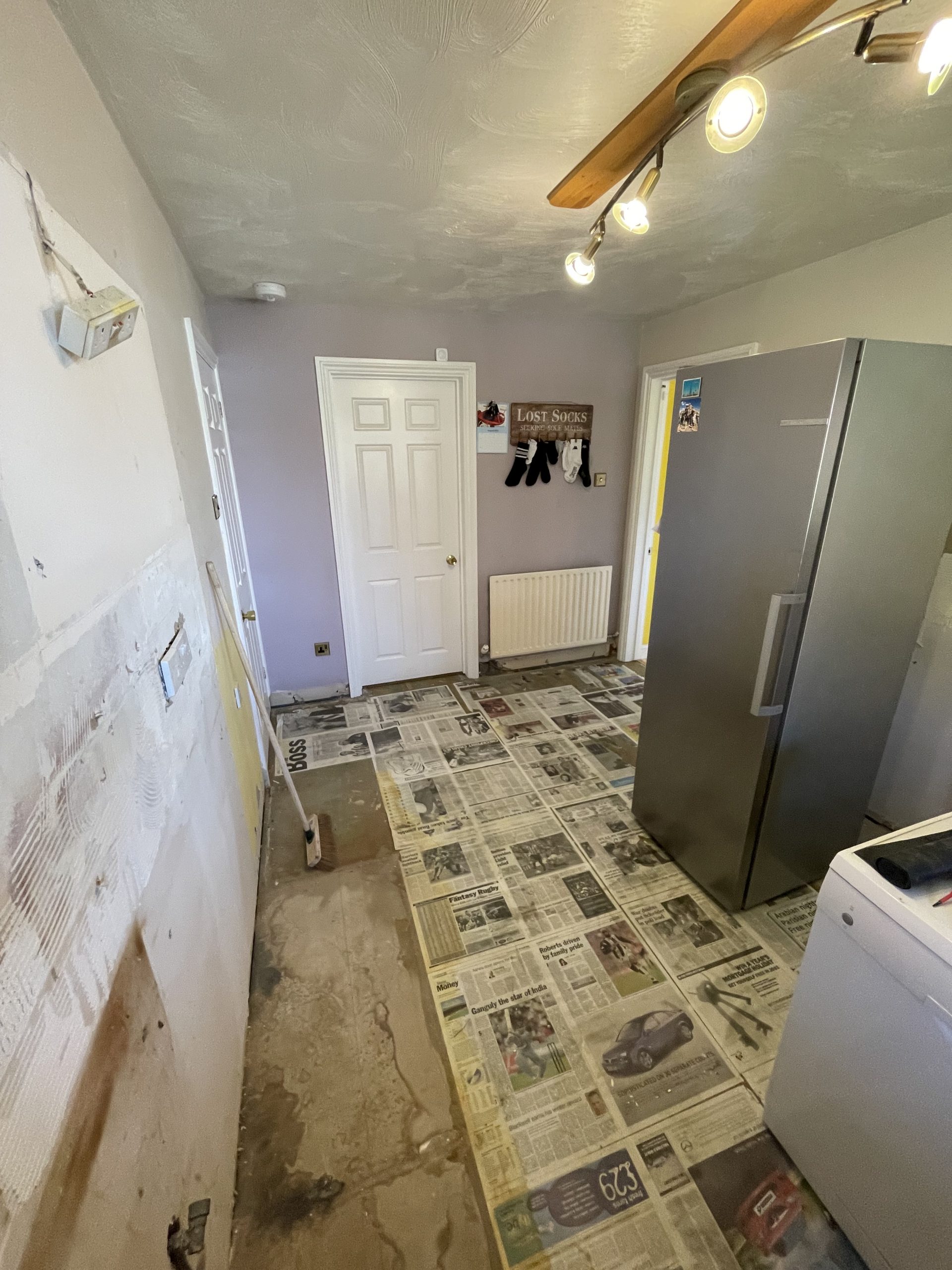
Kitchen and utility reworks. A new kitchen layout often follows the wall removal, not the other way around. We see homeowners commission cabinets before the structural design is finalised, then pay twice when a steel needs repositioning.
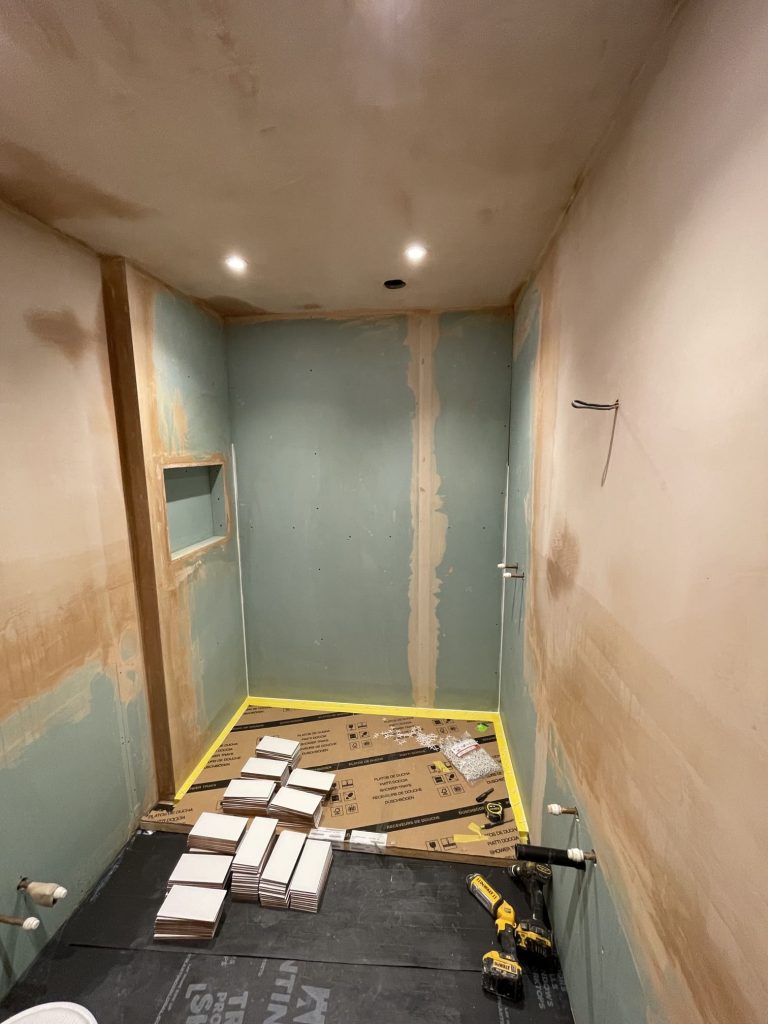
Bathroom installations in awkward first-floor footprints. Edwardian bathrooms were typically grafted on later, with timber floors never intended for tiled wet areas. Proper substrate preparation, tanking on critical zones, and joist reinforcement are the unglamorous foundation of any bathroom that will still look good in ten years.
The thread connecting all five: structural decisions made early shape every aesthetic choice that follows. The reverse never works.
Real Timelines and What Drives Them
The honest answer to “how long” depends on scope, but the rhythm of a serious Wokingham property renovation rarely deviates from this pattern:
- Pre-construction (survey, structural design, Building Control submission, planning where required): 6 to 12 weeks
- Construction (full refurbishment with structural alterations): 14 to 24 weeks
- Snagging, second-fix detail, handover: 2 to 4 weeks
A full house refurbishment of an Edwardian semi — structural alterations, new kitchen, new bathroom, full rewire and replumb, replastering — typically runs from £75,000 for moderate specification through to £200,000-plus for high-end reconfiguration with a rear extension. Costs vary with finishes, structural complexity, and how much of the original fabric needs remedial work before the new work begins.
For anyone curious about the sequencing, our piece on how a full structural transformation unfolds from vision to finish walks through the same stages we apply in Wokingham, with the same expectation: on time, on budget, beyond expectations.
This is also the moment to mention what we hand off and what we keep. From initial structural survey through Building Control sign-off, the project management sits with us. That includes structural engineer coordination, Party Wall surveyor engagement where needed, and the entire trade sequencing. Our wider structural renovation work across Berkshire is built on this single-point-of-accountability model — homeowners deal with one team, not seven.
Frequently Asked Questions
Do I need planning permission for an Edwardian semi renovation in Wokingham?
Most internal works fall under permitted development. Any change affecting external appearance, footprint, or load-bearing walls usually requires either Building Regulations approval or full planning consent via Wokingham Borough Council. Properties in a conservation area or with listed status carry tighter restrictions.
How much does a property renovation cost in Wokingham?
A full Edwardian semi refurbishment in Wokingham typically starts from £75,000 for a thorough cosmetic plus essential structural programme, and runs to £200,000 and beyond for full reconfiguration with a rear extension. Costs depend on finish level, structural complexity, and remedial work uncovered during opening-up.
Is Wokingham town centre a conservation area?
Parts of the town centre and several residential streets fall under conservation area designations. The boundaries are mapped on the Wokingham Borough Council planning portal and affect what changes are permitted on external elevations and within front gardens.
Do you serve villages outside Wokingham?
Yes. Our team covers Wokingham itself and the surrounding villages including Twyford, Earley, Woodley, Lower Earley, Winnersh, and Hurst. Reading, Bracknell, Newbury, Maidenhead and Henley-on-Thames are all within our regular working area.
How long does a full Wokingham renovation take?
A standard full refurbishment of a 3-bed Edwardian semi runs around 5 to 7 months from initial survey to handover, depending on whether structural alterations and planning permission are involved. Pre-construction work alone is typically 6 to 12 weeks before the first wall comes out.
Do you manage structural engineers and Building Control?
Yes. From the first home visit through to final sign-off we coordinate structural engineers, Building Control inspections, Party Wall surveyors where applicable, and all trade sequencing. Homeowners deal with our project manager throughout — not a fragmented chain of contractors.