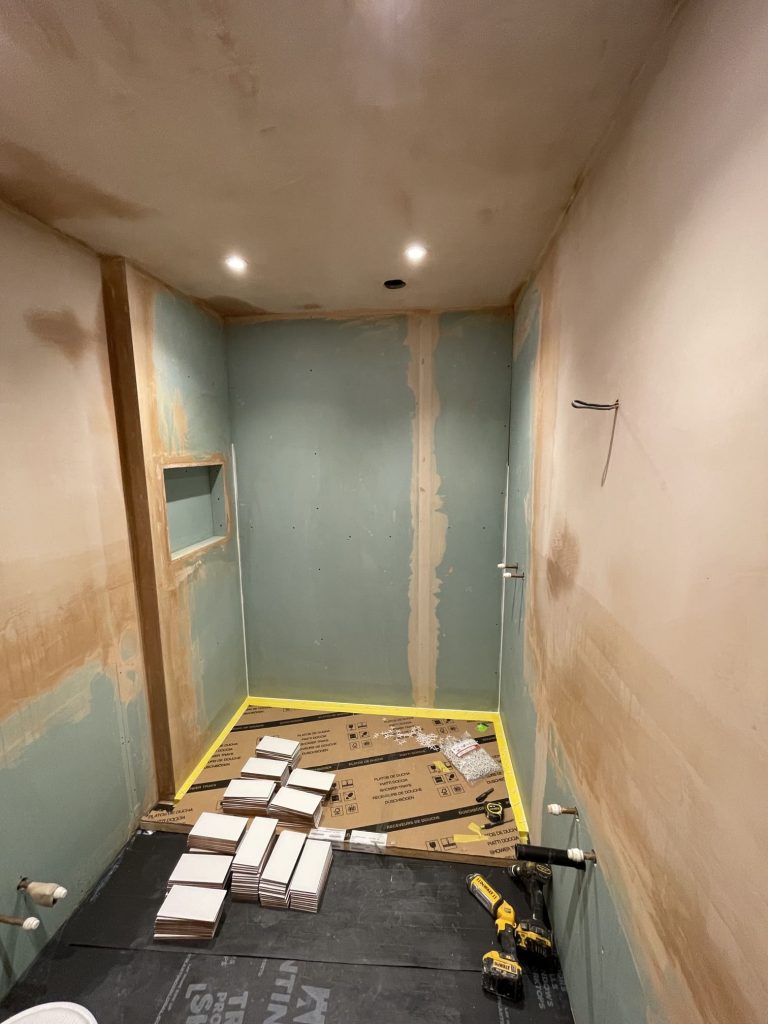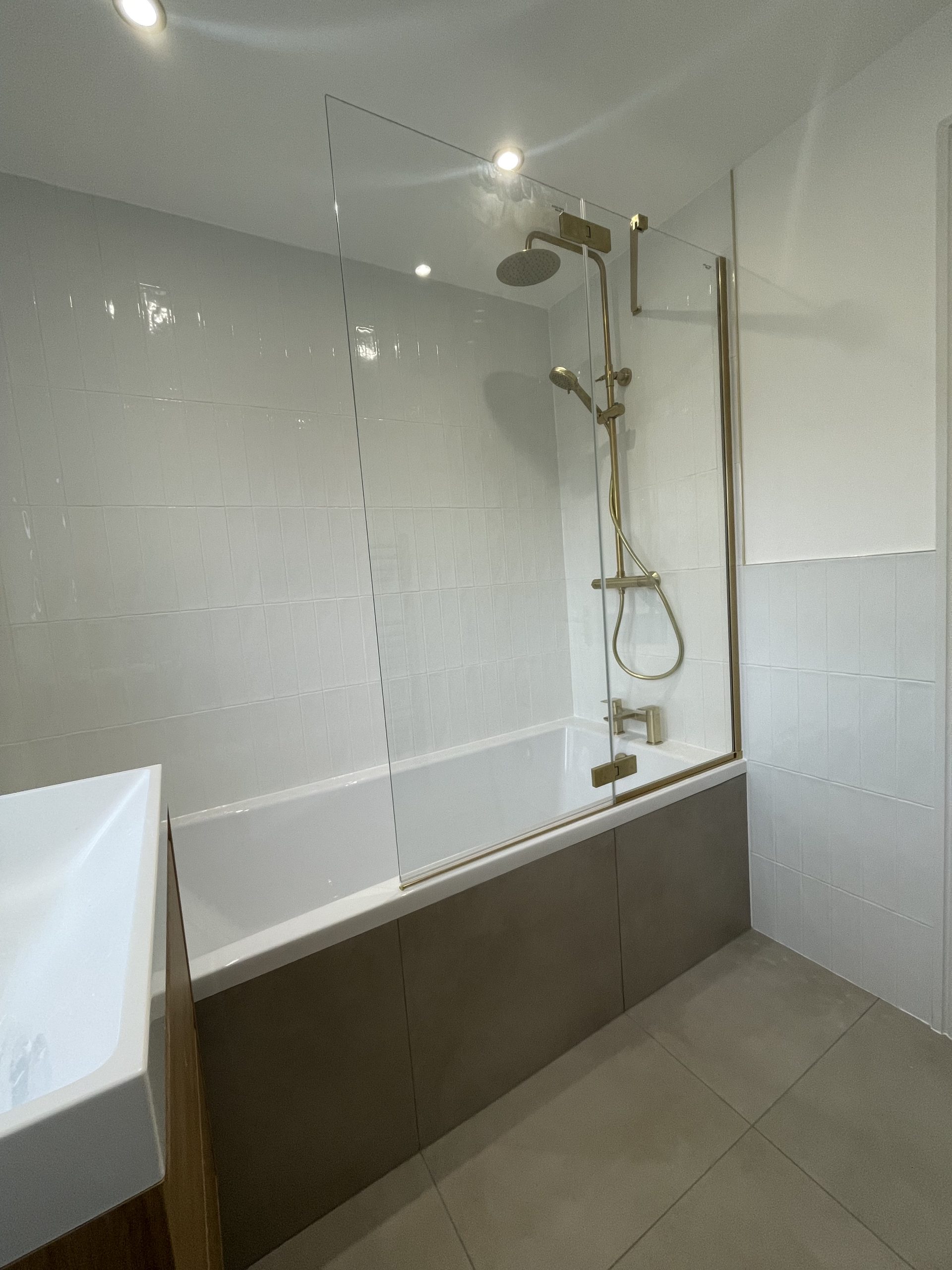
Two clients came to us in the same month asking the same question: can we have a wet room? One had a 2.9m × 2.1m bathroom in Caversham with a solid concrete subfloor and a straightforward drainage run. The answer was yes, and the result was one of the cleanest open-plan wet rooms we have fitted in Reading. The other had a 1.7m × 2.0m bathroom in Tilehurst with suspended timber joists, original floorboards, and a 1930s soil stack in an awkward corner. The answer there was: not without significant additional groundwork — and probably not worth it at that room size.
The wet room question is rarely about taste. It is almost entirely about what the building will support, and whether the footprint rewards the investment. Here is how we assess it, and what wet room installation in Reading typically involves and costs in 2026.
When a Wet Room Works — and When It Doesn’t
Room size is the first filter. A functional wet room needs enough floor area that the splash zone does not dominate the entire space — roughly 1.5m × 2.0m is the practical minimum, and anything below that tends to produce a bathroom where every surface is perpetually damp. Caversham Victorian terraces and the larger Edwardian semis in Wokingham often have generous bathroom footprints that suit the format well. The more compact Victorian additions common in West Reading and Tilehurst are harder cases.
Floor construction is the critical variable, and the one that most influences cost. A solid concrete slab — typical in 1960s and newer properties across Bracknell and Lower Earley, and often found on ground floors of older Berkshire homes — is the natural base for a wet room. The fall to drain can be cut directly into screed, the waterproofing membrane bonds well, and the structural load is not a concern.
Suspended timber floors are a different matter entirely. The joists flex. The boards move seasonally with moisture changes. A rigid tiled surface over a moving substrate cracks — not immediately, but within a few years. Making a suspended timber floor suitable for a wet room requires either sistering the joists to reduce flex, installing a concrete topping or Fermacell-type layer to create a stable substrate, or using a specialist wet room former designed to bridge the movement. Each adds cost and project complexity, and in a small bathroom the economics rarely stack up against a well-designed walk-in shower with a low-profile tray.
Victorian and Edwardian houses in Reading proper — the terraces off Oxford Road, the semis in Caversham Heights, the period stock across Earley — are mostly on suspended timber upper floors. This does not make wet rooms impossible, but it does mean the scope assessment at consultation stage is not optional.
What a Wet Room Requires That a Standard Shower Doesn’t
The core difference is the extent of waterproofing. A standard shower installation tanks the shower enclosure — typically 200mm onto the surrounding walls and the floor beneath the tray. A wet room requires the entire floor area to be waterproofed, along with all walls to at least 1.8m height in the wet zone. The membrane system needs to be continuous and correctly lapped at all junctions. We detail the tanking systems we apply to wet area floors and walls separately — in a wet room the stakes for doing this correctly are higher, because there is no enclosure to contain any failure.
Drainage design follows from the waterproofing. The floor must fall to the drain at a minimum gradient of 1:80 — shallow enough not to feel pronounced underfoot, steep enough to actually clear the water. Getting this right across a whole room floor (rather than just a shower tray) requires either a pre-formed wet room former or a screeded bed laid precisely to falls. A linear drain along one wall is the most common choice for contemporary wet rooms; a centre gully is traditional and suits symmetrical room layouts.
Tile specification also changes. Wet room floors require a minimum R10 slip resistance rating — one step above a typical bathroom tile. Large-format tiles (600×600mm or larger) are popular, but the fewer grout joints mean any inadequacy in the substrate preparation or falls design becomes more visible, faster. Smaller mosaic formats drain better and offer more grip but require significantly more grouting time and maintenance.
Ventilation requirements are higher too. A fully open wet room generates substantially more ambient moisture than an enclosed shower cubicle, and an undersized extractor fan creates persistent condensation problems on ceilings, walls, and mirrors. We specify minimum 15 l/s extraction for wet rooms as standard.
Wet Room Installation Costs in Reading: 2026 Figures
For a concrete-floor bathroom, the wet room element — drainage installation, floor former or screed, full tanking, slip-rated tiling — adds from £4,500 to £7,000 to a bathroom refit scope. Combined with a full bathroom renovation, wet room projects in Reading typically run from £11,000 to £18,000 depending on specification, suite choice, and the extent of wall tiling.
Suspended timber floor conversion adds £1,500 to £3,000 on top, depending on joist condition and the treatment required. If joists need sistering or partial replacement — not unusual in properties where a previous bathroom has introduced moisture over decades — the structural scope needs assessing properly before quoting.
Accessibility-specification wet rooms, fitted to Part M of the Building Regulations, add further scope: grab rail installation at specified heights and angles, adequate turning radius for a wheelchair (1500mm diameter clear space), low-level thermostatic controls, and careful drain positioning to avoid obstruction. These are not cosmetic additions — they require design thought from the outset, not as afterthoughts.
For context on how wet room costs sit within a full bathroom renovation budget, how bathroom renovation costs break down across the full specification range covers the wider picture.
Part M Building Regulations and Accessibility
Part M is primarily a new-build requirement, but it becomes relevant in the renovation context when a material alteration is being made to accommodate a specific accessibility need. A level-access wet room is the natural solution for households planning ahead for reduced mobility — a parent moving in, a family member with a disability, or simply a homeowner who wants to future-proof the property.
A Part M-compliant wet room is not simply a room without a shower tray. It requires: a level threshold from the adjacent floor (no lip at all), grab rails at the correct positions and heights, a turning circle of 1500mm diameter maintained clear, and thermostatic shower controls positioned at 750–1000mm from floor level for seated use. Getting this right from the start — rather than retrofitting rails and adapting drainage later — is significantly more cost-effective.
For most domestic bathroom renovations that are not material alterations, Building Regulations approval is not required. Any electrical work within the wet room must comply with Part P, and if drainage or soil stack runs are being altered, a notification to Reading Borough Council building control may be needed. We advise on this at the consultation stage, before any design decisions are committed.
Wet Room vs Walk-in Shower: The Practical Comparison
The appeal of a wet room is real — open, contemporary, and when done well, genuinely impressive. But the cleaning reality is worth naming directly. Because the entire floor and lower walls get wet with every shower, they need drying down every time. In Berkshire’s hard water area, limescale deposits on large unenclosed tile areas are accelerated compared to an enclosed shower. Homeowners who find a standard shower screen demanding to maintain will find an open wet room significantly more so.
Humidity affects the whole room too. Without a screen or enclosure to contain steam, the ceiling takes moisture with every use. Ceiling paint specification matters. Towel storage and any timber cabinetry needs to be positioned with ventilation in mind. These are solvable design decisions, but they are real ones.
Where the walk-in shower with a low-profile tray (15mm rise or under) often wins: smaller bathrooms, timber-floor properties, households with high daily usage, and anywhere the cleaning burden would outweigh the aesthetic gain. The 15mm-rise tray option gives the visual openness of a wet room with a fraction of the waterproofing scope and maintenance commitment.
Where the wet room genuinely wins: accessibility requirement, large concrete-floor bathrooms with strong natural ventilation, properties where an open, spa-like space is the deliberate design intent and the owners understand the maintenance trade-off, and second or en-suite bathrooms with lighter daily use. Our bathroom renovation service in Reading covers both approaches — the right choice depends on the specific room and how the household will actually use it.
Frequently Asked Questions
How much does a wet room cost in Reading?
A wet room element within a full bathroom renovation typically adds £4,500–£7,000 to the project cost for a concrete-floor room. A complete bathroom refit incorporating a wet room runs from £11,000 to £18,000 in Reading and wider Berkshire, depending on suite specification and tile choice. Suspended timber floor conversions add £1,500–£3,000 above this.
Do wet rooms add value to a Reading property?
In larger properties — four bedrooms and above — a well-specified wet room in a family bathroom or master en-suite does add value and appeal. In smaller properties, a high-quality walk-in shower installation often delivers equivalent or better return for a lower outlay. The accessibility angle adds value across all property sizes as the population ages.
Can I have a wet room in a Victorian house in Reading?
Yes, but the floor construction needs careful assessment first. Most Victorian houses in Reading have suspended timber upper floors, which require structural treatment before tiling. Ground-floor bathrooms in Victorian properties often have solid concrete substrates and are considerably more straightforward. We always assess floor construction as part of the initial consultation.
Do I need planning permission for a wet room?
Not typically. Most wet room installations fall under permitted development. Part P compliance for electrical work and a possible notification to Building Control for drainage alterations are the most common regulatory touchpoints. Accessibility-specification wet rooms constituting a material alteration may trigger Part M requirements — we advise on this case by case.
What is the difference between a wet room and a walk-in shower?
A walk-in shower has a defined shower zone — usually a low-profile tray or a screeded former — with the rest of the bathroom remaining dry. A wet room has no shower enclosure or tray: the entire floor is waterproofed and drained, and the shower runs open into the room. The distinction matters for waterproofing scope, drainage design, tile specification, and ongoing maintenance.
How long does wet room installation take?
A wet room within a full bathroom refit typically takes 12–18 working days. The screed or former needs adequate drying time before tiling can begin — skipping this step causes tile failures and is the most common reason wet rooms underperform. We build drying time into the programme rather than compressing it.
Are wet rooms harder to clean than standard bathrooms?
More demanding, yes — particularly in Berkshire’s hard water area. The entire open floor needs drying after each use to prevent limescale and mildew build-up. Grout lines across a wet room floor accumulate scale faster than an enclosed shower tray. Daily maintenance is genuinely more involved than with an enclosed shower. For households who want the aesthetic without the upkeep, a low-profile tray with a frameless screen is often the better long-term choice.