Whether modernizing a Victorian terrace in central Reading or upgrading a sprawling family home in the Berkshire commuter belt, a gleaming quartz worktop and perfectly aligned shaker doors often mask a complex, underlying reality. Homeowners frequently focus their energy on selecting the ideal cabinet finish or the perfect shade of brass hardware, treating the kitchen remodel purely as a cosmetic exercise. Yet, the true success of any culinary space is dictated long before the first cabinet is mounted to the wall. It is forged in the hidden infrastructure—the electrical loads, the plumbing geometry, and the structural integrity of the room itself.
Failing to respect the engineering requirements of modern appliances or miscalculating the spatial flow inevitably transforms a dream project into a logistical nightmare. Achieving a seamless finish requires a profound understanding of how diverse trades intersect within one of the most heavily utilized rooms in any property.
The Engineering Behind the Aesthetics
Modern kitchens draw an immense amount of power and demand rigorous water management systems. Unlike a standard living room, where a few sockets suffice, a contemporary cooking space operates like a miniature industrial hub. Induction hobs require dedicated radial circuits, while integrated dual ovens, boiling water taps, and heavy-duty extraction units each demand precise load calculations to prevent system overloads and ensure Part P electrical compliance.
The plumbing network is equally unforgiving, especially in older Berkshire properties where legacy pipework often requires complete modernization. Transitioning a sink to a central island or retrofitting a smart dishwasher involves complex first-fix plumbing. Waste pipes must maintain specific gradients to prevent blockages, and supply lines need careful routing to avoid freezing or pressure drops. This level of technical planning is why investing in comprehensive kitchen installations tailored to local building standards is non-negotiable. Just as moisture control is the hidden backbone of any professional bathroom installation, robust utility mapping forms the critical foundation of an enduring kitchen.
Structural Integrity and Layout Optimization
Knocking down a dividing wall to create an expansive, open-plan diner is the hallmark of modern interior architecture. The reality of executing this vision involves much more than simply swinging a sledgehammer. Many walls separating old galley kitchens from dining rooms—a common structural feature across Reading’s period housing stock—carry the heavy load of the upper floors or roof.
Removing these requires temporary propping, precise calculation of point loads, and the installation of heavy RSJ (Rolled Steel Joist) beams. Even when walls remain intact, the condition of the subfloor frequently requires intervention. Uneven timber joists or degraded concrete slabs will cause newly installed cabinets to rack and twist over time, eventually cracking expensive stone worktops. A master installer assesses the structural envelope first, ensuring the room is geometrically true and structurally sound before aesthetic work commences.
The Critical Sequence of a Professional Fit-Out
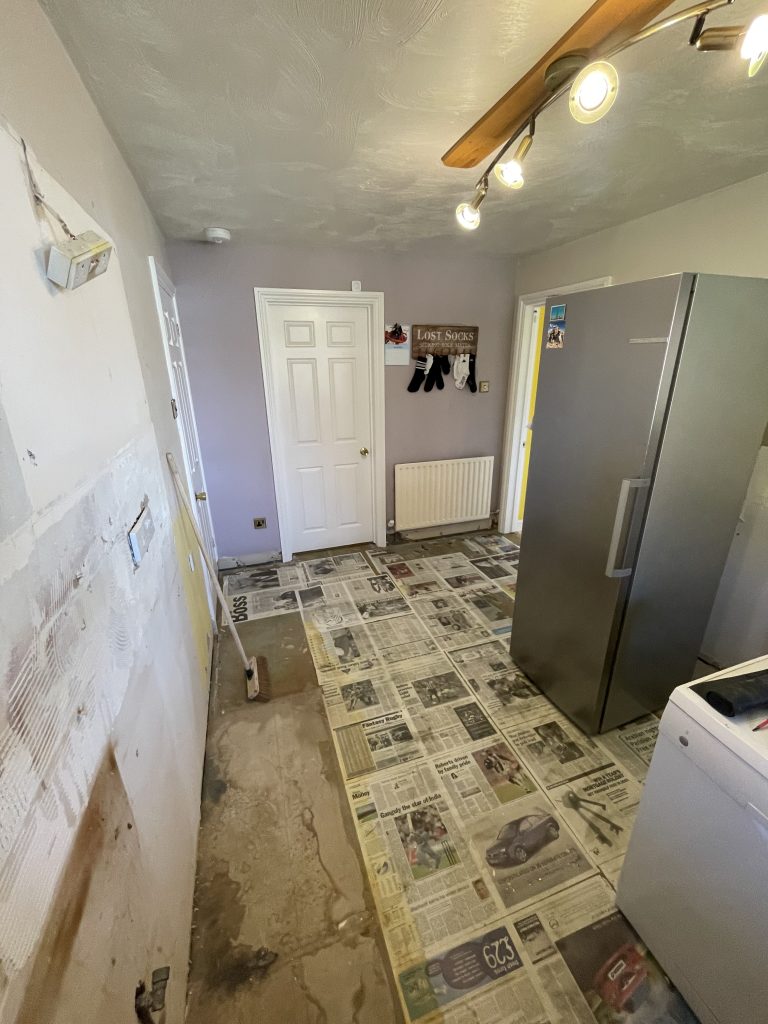
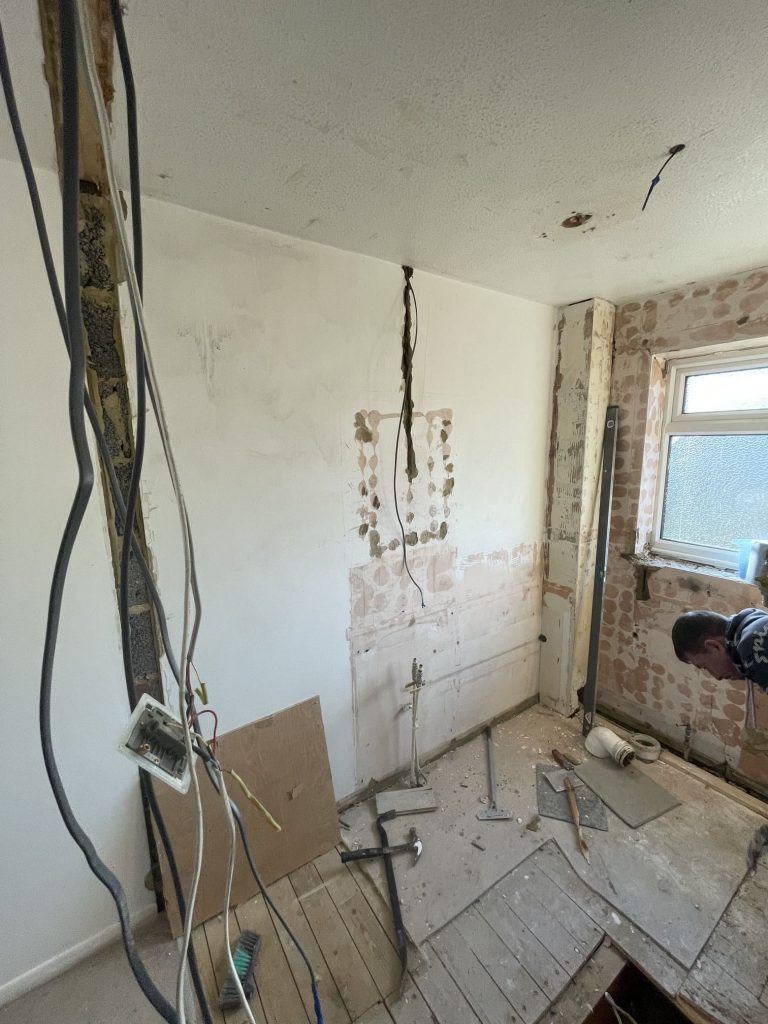
Chaos ensues when trades overlap incorrectly. The timeline of a high-end fit-out follows a strict, non-negotiable hierarchy. It begins with the rip-out and structural alterations, immediately followed by the first-fix phase, where electricians and plumbers chase channels into the masonry to conceal pipes and wires.
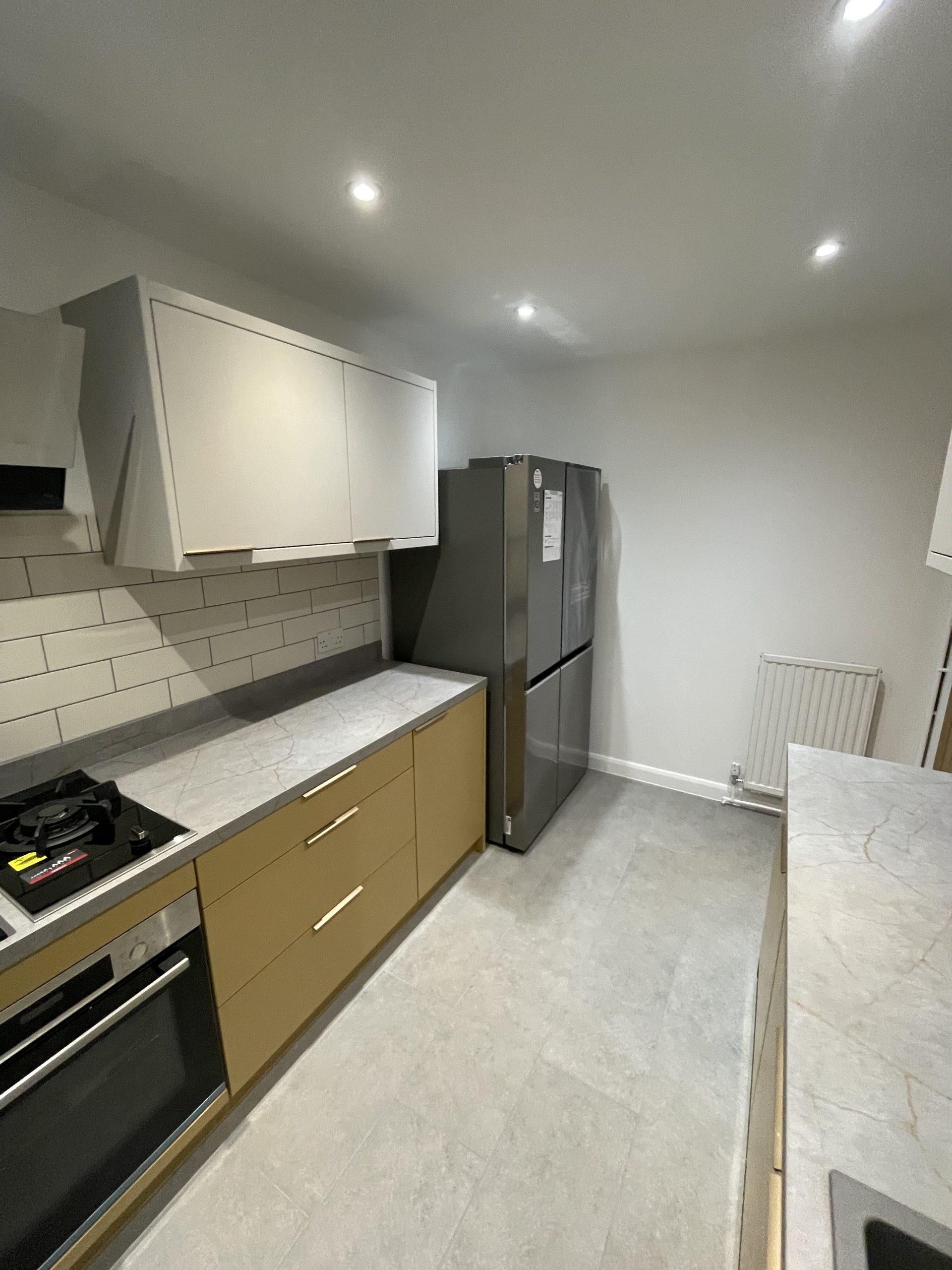
Only after the walls are re-plastered and fully dried can the second-fix plumbing and electrical work begin, alongside the laying of the finished floor. Cabinet installation demands clinical precision; installers use laser levels to scribe end panels perfectly to walls that are rarely perfectly plumb. Templating for stone or composite worktops happens only when base units are permanently fixed, requiring a mandatory waiting period before the final surfaces are fabricated and fitted. Disrupting this sequence inevitably leads to blown finishes, trapped moisture, and misaligned appliances.
Avoiding the DIY Trap in Modern Kitchens
The advent of flat-pack furniture has created a dangerous illusion that fitting a kitchen is a weekend project for an enthusiastic amateur. The reality is that modern cabinetry features exacting tolerances that leave zero room for error. Integrated appliances demand absolute precision. A fridge-freezer housing unit that is out of plumb by even two millimeters will result in doors that bind or fail to close, compromising the appliance’s efficiency.
Furthermore, any alterations involving gas lines or significant electrical modifications carry severe legal and safety implications. Gas Safe certification and building regulation compliance are not optional extras; they are legal requirements that validate your home insurance. The financial risk of botching an expensive worktop cut or failing to properly waterproof a sink housing far outweighs the initial cost of securing an experienced, multi-disciplinary local installation team.
Frequently Asked Questions
How long does a full kitchen installation typically take? A complete rip-out and refit usually spans two to four weeks. This timeline accounts for structural checks, first-fix utilities, plaster drying times, cabinet fitting, and the templating-to-installation window required for custom stone worktops.
Do I need building control approval for my new kitchen in Reading? If you are moving a sink to a new location requiring new drainage, removing load-bearing walls, or making significant electrical additions, you will need approval from the local council or work completed by competent, certified persons (like Part P electricians and Gas Safe engineers) who can self-certify their work.
Can I keep my existing flooring when installing new cabinets? It is highly recommended to run new flooring under the base units, or at least perfectly up to the legs before the plinths are attached. Installing cabinets on top of an old, uneven floor complicates leveling and traps you into a specific footprint if you decide to change the layout later.
Why is my contractor delaying the worktop installation? Bespoke worktops (like quartz, granite, or Corian) cannot be cut from standard plans. Once the base cabinets are permanently secured and leveled, specialized fabricators must visit the site to create an exact digital or physical template. The manufacturing process takes a week or two to ensure millimeter-perfect accuracy around your specific walls and sink cut-outs.
Your next step: To ensure your upcoming property upgrade is managed with structural precision and flawless execution, explore our dedicated approach to kitchen installations and schedule a consultation with our Berkshire-based technical team today.